[EXAMPLE] An unconventional corporate offsite: why your teams' comfort is a problem
00
A classic corporate offsite teaches you nothing about your teams. It confirms what you already know. Personality tests filled in behind a screen, "team building" workshops where everyone smiles, a day in the countryside followed by a buffet: these formats measure how your people behave socially when all is well. The trouble is that "when all is well" does not exist in a crisis.
The In Cognita bootcamp is an unconventional offsite designed to observe your teams where it counts: under strain. Run by former special forces operatives and behavioural science experts, it produces a behavioural profile of every participant. This is not a generic personality profile: it is a map of real reactions, observed in situation, that your managers can use straight away.
This article explains how the approach works, what it reveals, and why it is changing the way some organisations think about team cohesion.
What classic offsites do not measure
Most corporate offsites rest on an unspoken assumption: if people have a good time together, they will work better together. That is partly true. It says nothing, however, about the dynamics that take hold when plan A evaporates, plan B is already obsolete, and fatigue starts to cloud judgement.
Work in social psychology shows that we operate in two registers. The psychologist Daniel Kahneman calls them System 1 (fast, automatic, emotional) and System 2 (slow, deliberate, analytical). At a classic offsite, everyone runs on System 2. Each person manages their image, adjusts their answers, plays the part expected of them.
To observe System 1, you need an environment that calls on it. That is the principle behind the bootcamp.
How the In Cognita bootcamp works
It is not an assault course, nor a sports day with a debrief over coffee. The bootcamp is a closed environment, built as a behavioural laboratory. For several hours, by day and by night (for the bolder ones), participants face situations where communication becomes a necessity, where decisions have to be made on incomplete information, and where the body sends signals the mind must learn to read.
0%
Learning frameworks you can apply
0%
Hands-on practice
0%
“No… are we really doing this?”
* 2024 figures
The exercises are confidential. That is a condition of their effectiveness. What can be said: you will face the elements, uncertainty, and the need to work as a collective when acting alone is no longer enough.
What happens there is not forgotten. Teams come back sharing a vocabulary, common references, and a different reading of one another. It is a team cohesion offsite, but grounded in real experience rather than theory.
This approach is not for everyone. It calls for a willingness to be questioned, reasonable physical fitness, and above all the acceptance that the findings will not always be comfortable to hear. It is not an exercise in validation.
What behavioural profiling reveals
During the bootcamp, our experts observe each participant through a behavioural analysis framework built by crossing operational field methods with knowledge from cognitive psychology. The aim is not to assess physical performance: it is to map the behavioural reflexes that fire under pressure.
In these conditions, two kinds of discovery come up every time.
Zones of strength: what you do not see day to day
Some profiles reveal themselves under strain in ways their current role never calls for.
In normal circumstances, Florian is one manager among others. Under pressure, he becomes the group's anchor. He sets a direction calmly and manages his team's human and physical resources with a composure nobody knew he had. It is not that he "rises above himself": it is that his everyday environment never activates that capacity.
Paul, for his part, reveals a solution-focused mind and a tactical persistence that never show up in steering meetings. Faced with real difficulty, he does not waver. He searches.
These latent strengths are common. They go unnoticed because the usual professional setting has no need to call on them. The bootcamp identifies them, names them, and lets management feed them back into strategy.
Blind spots: what your competitors will eventually exploit
This is perhaps the most concrete contribution of the method. A blind spot is a flaw in the way someone operates that they cannot see themselves, and that daily routine conceals.
Thomas and Céline, both competent within their remit, tend to fade out when the effort becomes intense. They go quiet, physically withdraw from the group, stop communicating. In a company, these are the people who do not ask for help and let a project derail without anyone noticing.
Eric, extremely solid and results-driven, forgets his teammates in the heat of the action. His focus on the technical objective means he "loses" people along the way. A strength that turns into a risk when he is managing a team of ten.
Spotting these patterns at a bootcamp costs one day. Spotting them in a real crisis costs contracts, clients, and sometimes entire teams.
Every participant leaves with…
At the end of the bootcamp, each participant receives an individual profiling booklet. The document analyses the behavioural reflexes observed, without judgement, on factual evidence.
- How Charles's willingness to question himself offsets his difficulty in taking the lead early on.
- How Léa's clear-sightedness lets her make sound decisions upstream, even when her emotional stress rises quickly.
The company receives a collective map: the natural complementarities between profiles, the group's systemic weaknesses, and operational recommendations for assigning roles and handling a crisis.
This is not a report that ends up in a drawer. It is a valuable management tool, and it can be put to work immediately.
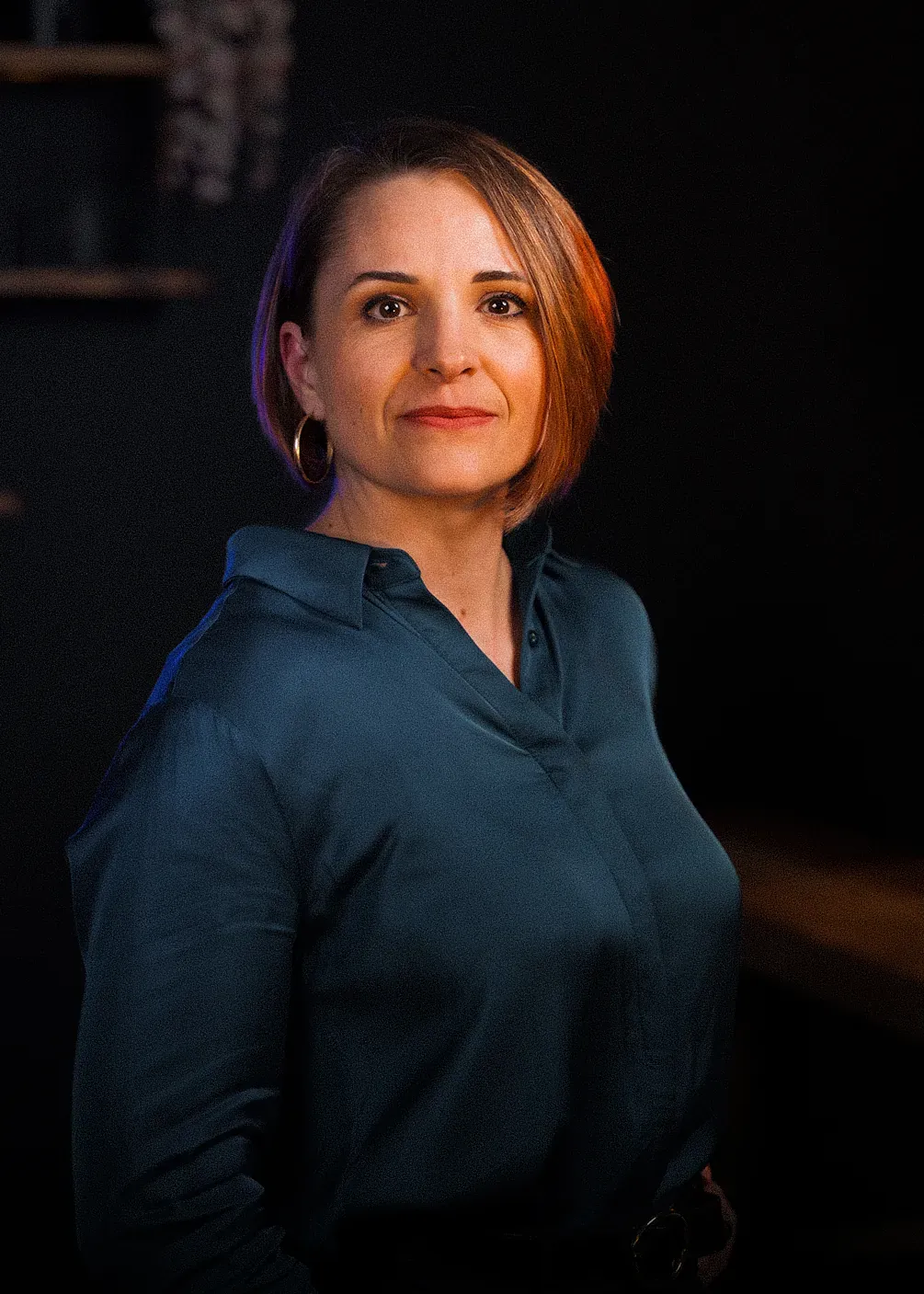
Anne-Gervaise Vendange, co-founder of In Cognita
Who this experience is for
The In Cognita bootcamp is used by executive committees, project teams at a critical stage, and managers who want a field reading of their people. The companies that come to us often have one thing in common: they have already done the classic offsites and get nothing more out of them.
It is open to individuals too. Executives in transition, entrepreneurs, athletes, people retraining: the motivations vary, but the mechanics are the same. You come looking for a truth that daily life does not give you.
If you recognise yourself in this description and would like to know more, visit the B2B offsite page or the B2C bootcamp page. And if you are hesitating, that is probably normal — most participants hesitate before taking the plunge, but none regret going through the experience.
Frequently asked questions
No. The aim is not physical performance. The programme is designed to be mentally demanding, not to sort out the athletes. Physical effort is there to reveal behaviour, not as an end in itself. Every exercise is adapted to the participants' level.
In closing
A classic cohesion offsite will leave you with group photos and pleasant memories. An In Cognita bootcamp will leave you with a usable behavioural map, operational recommendations, and a different reading of your own team.
Comfort, in a team as anywhere else, is not a goal. It is a temporary state that prevents you from seeing what is really going on. Stepping out of that comfort, briefly and under control, is what lets a collective discover what it is capable of — and what, otherwise, will end up costing it dearly.


Newsletter
Join « Turbulences », the In Cognita newsletter
In every issue, Turbulences decodes management, negotiation and ethical influence: insights to understand people without getting tangled up in relationship dynamics, and practical reference points for acting when it matters.
00